
HPL vs Melamine (MFC): Which Laminated Board?
The short answer: Both are boards with a decorative face made from paper and resin. Melamine-faced chipboard, or MFC, has a thin layer of resin-soaked paper fused straight onto chipboard. HPL, or high pressure laminate, is a much thicker, harder sheet, about 0.8mm, which we press onto plywood or MDF. MFC is usually cheaper and does a fine job on indoor cupboards that stay dry. HPL wears better, and on a plywood core it copes better with damp and holds screws better, so it suits worktops, doors, vans and anything that gets hard use. We make HPL boards only. We don’t sell MFC, but we can cut and edge band MFC you supply.
What each one is
MFC (melamine-faced chipboard). A sheet of decor paper soaked in melamine resin is pressed straight onto a chipboard core with heat, in one step. The face is a single layer of paper and resin, a fraction of a millimetre thick. You’ll also see it called melamine board or low pressure laminate. The same face on an MDF core is melamine-faced MDF.
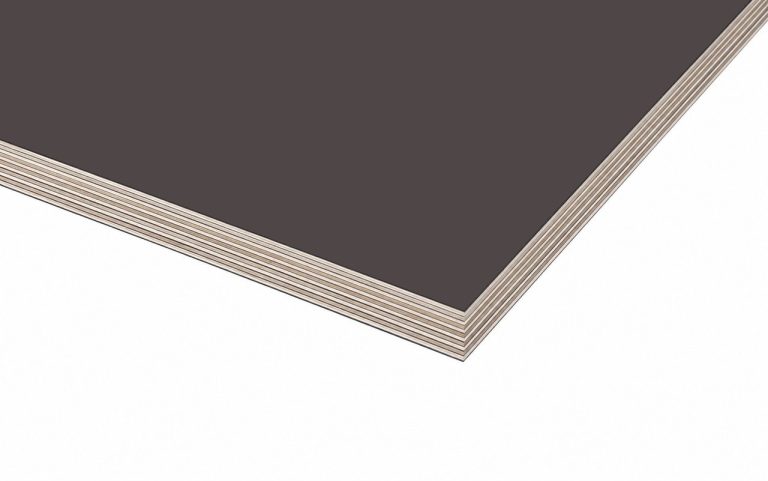
HPL (high pressure laminate). HPL is made as a separate sheet, from layers of kraft paper soaked in resin, with a decor paper and a clear top layer, pressed together under high pressure and heat into a hard, dense sheet. Ours is 0.7 to 0.9mm thick, about 0.8mm per face. We press it onto a core of lightweight ply (poplar), birch ply or MDF, on both faces as standard so the board stays flat.
HPL and MFC at a glance
| HPL on ply or MDF | MFC | |
|---|---|---|
| Face | Laminate sheet, about 0.8mm thick | Resin-soaked paper, much thinner |
| Core | Lightweight ply, birch ply or MDF | Chipboard |
| Knocks and scratches | Hard-wearing, used on worktops and doors | Fine for light use, chips more easily |
| Damp | Plywood copes better. MDF swells if water gets in | Chipboard swells if water gets in, and stays swollen |
| Screws | Plywood holds screws well, birch best | Holds less well, and weakens if a screw is refixed |
| Edges | Birch can be left on show. Band the others | Always needs edging |
Wear and tear
HPL’s thicker, harder face stands up to scratches and knocks better than a melamine face. That’s why it’s used on worktops, desks and doors that get daily use.
A melamine face does a good job on cupboard sides and shelves, which see lighter use. On a worktop or the front edge of a door, it wears and chips sooner, and once the chipboard shows, it’s hard to repair neatly.
Damp
Chipboard is made from wood chips bonded with glue. If water gets in through a cut edge, a chip in the face or a screw hole, the chipboard swells, and it doesn’t shrink back. Moisture-resistant grades are better, but the edges still need covering.
Plywood copes better with the odd splash and with damp air, which is one reason it’s the usual board for van and horsebox furniture. MDF swells if water gets in, so band every MDF edge. Whatever the core, in a kitchen, bathroom or van, band or seal every edge.
Weight
Weight counts in a van, a horsebox or anything that gets moved. Chipboard is a dense core, so MFC is fairly heavy for its thickness, and lightweight ply is much lighter. A full sheet of our 13mm lightweight ply (14.6mm finished) weighs 23kg laminated both faces, against 36kg for 15mm birch ply and 34kg for 15mm MDF. Our weight guide has the figures for every board.
Screws and joints
Plywood is built from layers of veneer with the grain crossing, so it holds screws well, and birch ply best of all. Chipboard holds screws less firmly, especially in the edge, and a screw that’s taken out and put back often won’t grip again. MDF holds screws better in the face than in the edge, so drill pilot holes.
In a moving vehicle, every fixing takes constant shaking, and joints in chipboard can work loose over time.
Edges and cutting
MFC edges are always covered, usually with plastic or melamine edging, because bare chipboard looks rough and soaks up water. Our MDF edges should always be banded too. Birch ply edges can be left on show and sealed with clear lacquer, and lightweight ply edges are best banded, or at least sealed. We band straight edges by machine with colour-matched edge banding. See our edges guide.
Both kinds of face can chip along a saw cut, so either board needs a sharp, fine-toothed blade. Our guide to cutting laminated board without chipping explains how.
When MFC makes sense
MFC suits indoor furniture that stays put and stays dry, such as wardrobe interiors, cupboard carcasses and shelving, where cost matters more than wear. We don’t sell MFC, but if you supply it, we can cut it on our CNC and band the edges.
When HPL is worth it
- Worktops, desks and counters that get daily wear.
- Doors and drawer fronts that get handled and knocked.
- Vans, horseboxes and anything that moves, where weight and fixings matter.
- Kitchens, bathrooms and other damp places, with every edge banded or sealed.
- Furniture with edges on show, using birch ply.
Or let us cut it for you
Pick a core: lightweight laminated plywood, laminated birch plywood or laminated MDF. Send us a cutting list or a DXF drawing and we cut the parts on CNC, nested onto whole sheets. Your quote comes with a sheet layout, you can keep the offcuts, and we band straight edges in the same job. Cutting and banding are priced on quote.
Every board is pressed to order, with a normal turnaround of two weeks from order. Collect free from our workshop in Plympton, Plymouth, or we deliver by pallet across mainland UK. To pick a decor first, order a free sample of any of our 750+ decors from Formica, Egger, Polyrey, Merinolam, Altofina, Geaves and Stylam.
Ready to order?
Try the decor first with a free sample, or send us your cutting list and we’ll quote with a sheet layout.